Seven Threads, One Cloth
Conventional organizations separate economic development, education, health, arts, justice, and care into unrelated programs. Communities do not live that way. A woman’s livelihood is connected to who holds her child. A young person’s education is connected to culture, art, belonging, and the health of the adults around her. Healing is connected to justice, land, memory, and whether the rent gets paid.
So we work as seven threads, each with its own leadership and its own measures, each contributing to the others. A childcare cooperative is an economic project, an early childhood environment, an educational pathway for women, and a piece of care infrastructure all at once.
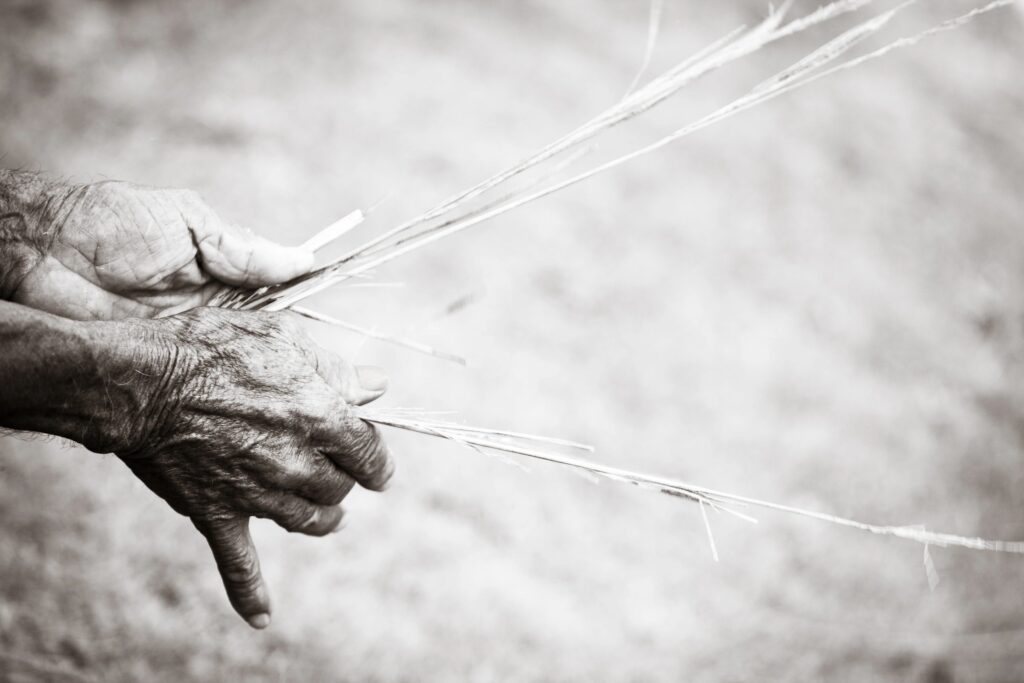
Making runs through all of it. In the traditions we come from, art was never separate from living. A pot carried water, and it was beautiful, and it was the maker’s signature and her mother’s before her. The hours a woman spends at a loom or a table or a bowl of dough can pay her rent, settle her body, and carry her culture forward at once, and we design so that all three are possible rather than asking her to choose.
Seven threads. One cloth. Many weavers. Children and future generations at the center.
Thread One: Livelihoods and Cooperative Economies
Women build shared assets, dignified work, and enterprises rooted in what their cultures already hold.
This thread treats livelihood as more than employment. We help groups organize, clarify roles, assess demand and costs, build skills, and test a product or service. Where members choose cooperative ownership, they develop shared decision-making, compensation, and reinvestment arrangements with specialist support.
Underneath it sits the shared infrastructure a small venture cannot build alone: administrative and compliance support, market development, access to patient capital, and pathways for women to own the assets their labor creates.
What we hold ourselves to: women gain income, decision-making power, and ownership. Cultural knowledge is compensated and protected rather than treated as free raw material. Caregiving, language, transportation, and documentation barriers are treated as design conditions, not individual failures.
Thread Two: Children, Youth, and Lifelong Learning
Children are centered as future elders. Learning honors culture, lived experience, and the whole person.
This thread runs from early childhood through adult learning, and treats education as a community responsibility.
Culture keepers, educators, and young people co-create learning grounded in language, local knowledge, arts, and practical skills. Paid teaching, mentoring, and institutional partnerships compensate educators, while grants and sponsorships support equitable participation.
Care for children runs through everything else we do, because it is what makes everything else possible for the women we work with. We treat it as programming rather than logistics.
Thread Three: Cultural Continuity and Living Knowledge
Communities preserve, practice, teach, and evolve their own knowledge across generations.
We approach culture as living knowledge, not as a museum object. Preservation includes documentation, but it also requires teachers, learners, places, livelihoods, ethical protocols, and the freedom for communities to adapt tradition to present conditions. A practice survives by being passed hand to hand and dies when it is only written down.
Culture keepers teach, document, mentor, and guide the ethical use of knowledge, and they are paid for it. This is the first thing we protect in a budget.
Traditional foodways, plant knowledge, craft, and cultivation move through our enterprises, our education work, and our public programs. Reflection, dialogue, and oral history help communities reconnect knowledge separated by migration, displacement, and industrial life.
A note on culture and faith: culture and spirituality overlap but are not the same. Our programming begins with cultural preservation, history, ethics, art, land, language, and community wellbeing. Where spiritual knowledge is included, participation is voluntary and clearly explained. Cultural learning does not require religious agreement.
Thread Four: Women’s Wellbeing and Social Health
Health as a product of conditions, not a service delivered.
We work on what actually determines a woman’s health: whether she has income, whether she can get where she needs to go, whether she is isolated, whether she is carrying harm that no one has helped her set down. Connection is one of the most powerful health interventions available, and it is the one most often left out.
Facilitated circles, peer support, and reciprocal exchange strengthen belonging and collective healing. Plant and herbal medicine, somatic learning, and culturally grounded health knowledge are offered with clear safety boundaries. Intergenerational circles let elders, mothers, and younger women exchange knowledge, with consent and confidentiality held carefully.
Community care is not a substitute for clinical services, and activities stay within practitioners’ competence. We build social health and peer support, and we connect people to professional services when that is what is needed.
Thread Five: Justice, Belonging, and Global Kinship
Naming structural harm while building truthful relationships and living ties across the world.
The systems we live inside were built on ideas about who matters, and about whose making counted as art and whose counted as chores. People need to be able to name harm, understand how institutions reproduce it, repair what can be repaired, and build something different together.
Alongside that, we build reciprocal ties between communities here and communities abroad. Our Ethiopia work is the clearest example: rather than sourcing materials anonymously, we connect the women who supply the ingredients with the people who use them, so cultural knowledge and economic value stay connected to their source.
Exchange is reciprocal. Each community keeps authority over its knowledge, identity, and decisions.
Thread Six: Arts, Music, and Cultural Expression
Creative practice carries memory, supports healing, develops youth, and helps communities imagine what comes next.
Art is not decoration on top of the real work. This thread holds preservation and experimentation together: it supports inherited forms without freezing them, and gives artists room to make new work that speaks to this generation.
Artists and makers gather to teach, practice, document, and reimagine their traditions. Paid workshops, commissions, performances, and collectively marketed goods support livelihoods. Weavers determine how their work is represented, priced, credited, and shared.
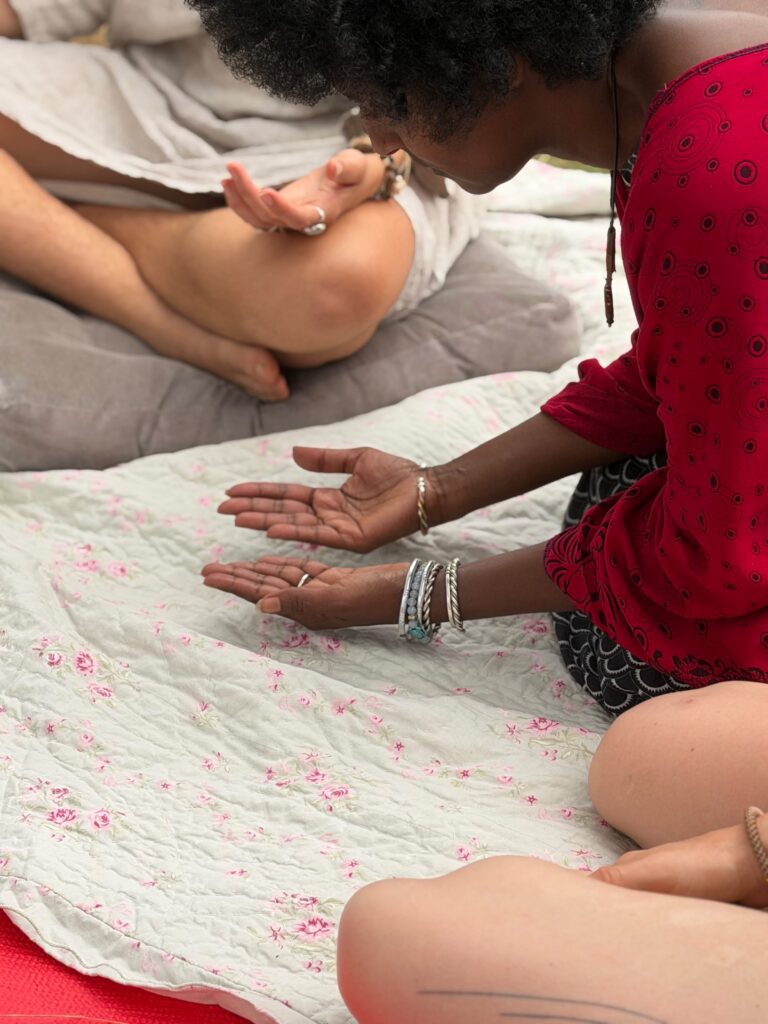
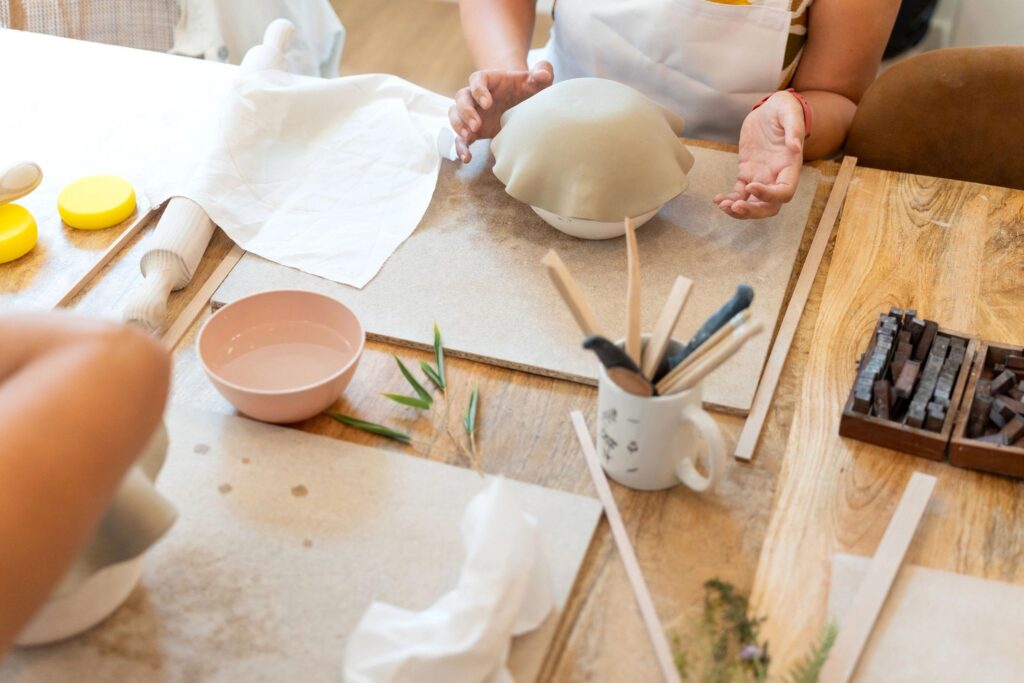
Art as connection. Isolation is one of the most reliable predictors of poor health, and one of the hardest things to fix by talking about it. A shared table solves it sideways. Hands occupied, eyes on the work, conversation coming and going as it wants to. People tell the truth more easily when they are not being looked at, and they come back for the company as much as the craft.
Art as healing. We treat making as therapeutic in its own right, from an Earth centered rather than a clinical frame. The materials come from the ground and return to it. The work follows the seasons, the pace of the plant, the drying time of the clay, none of which can be hurried. A woman in relationship with a material is in relationship with something outside her own difficulty, and that relationship asks for patience, attention, and reciprocity, which are the same things that heal a person. This is old knowledge. Our ancestors did not make baskets to process their feelings, and yet the making held them, and it holds us.
Sessions are trauma informed from the ground up: predictable structure, genuine choice about participation, no expectation that anyone explain what she is carrying. The work is the container.
Thread Seven: Mutual Aid, Land, and Village Care
The practical care infrastructure that makes every other thread possible.
Our ancestors understood access to what a person needs as a birthright rather than something earned. Mutual aid is not a side program or a crisis-only response. It is the connective tissue of the organization. People receive at one moment and contribute at another, and dignity does not depend on repaying immediately or in the same form.
This is also where our partner network lives. Social-service partners help people navigate support for everyday needs. Educational partners contribute learning, mentoring, and professional development. Threads coordinates these relationships and keeps community voices at the center, so that each project becomes a place where people build both an enterprise and a dependable network of care.
Practically: coordinated childcare, meals, rides, language support, accompaniment, referrals, and short term help, shaped by real community capacity and clear boundaries. Flexible support during illness, displacement, disaster, or economic shock, with safeguards so the care work does not concentrate on a few people.
Our Projects
The threads describe how we work. These are the four projects running now.
Seattle Childcare Collective
The Seattle Childcare Collective brings immigrant women childcare providers together to strengthen culturally grounded early childhood care and build sustainable livelihoods.
Providers share knowledge, practice collective leadership, and support one another as they carry East African caregiving traditions into their work with children and families. Threads connects the collective with educational and social-service partners to strengthen professional learning, access to support, and shared administrative capacity.
Together we are building pathways toward cooperative ownership and greater economic independence, while honoring the experience these women already bring. This work connects the wellbeing of providers, the stability of families, and children’s sense of belonging within one community of care.
Seattle, Washington. Threads One, Two, Four, and Seven.
Flower of Life Refugee Bakery
Through Flower of Life, refugee women in Asheville come together around ancestral breads, food traditions, and the work of building a shared livelihood.
Baking creates space for remembering home, exchanging skills, and building relationships across cultures. We organize that knowledge into a cooperative bakery pathway, connecting women with learning opportunities, business support, and the relationships that help them bring their products to market. Our wider partner network connects participants with social services and educational programs that support their families and their participation.
Together we are building an enterprise in which women shape their own work, preserve living food traditions, and strengthen their capacity to earn and to lead.
Asheville, North Carolina. Threads One, Three, and Seven.
Women’s Frankincense Cooperative
We connect Borana women in Ethiopia with makers and markets in the United States through the supply of frankincense, myrrh, and other traditional resins.
Women’s knowledge of these materials and the cultural practices around them anchors the relationship. Threads builds partnerships around cooperative learning, production, and market access, with fair compensation and women’s participation in decisions guiding the work.
Through this exchange we link the women who supply the ingredients with the people who use them, so that cultural knowledge and economic value stay connected to their source.
Ethiopia. Threads One, Three, Five, and Seven.
Our Skincare and Wellness Line
We bring ingredients from women’s cooperatives in Ethiopia together with the skills of makers in the United States. Frankincense, myrrh, and other selected ingredients connect the products to the women and the knowledge behind them.
Through production, learning, and sales we build income for suppliers and makers, and we create a source of funding for Threads’ community work.
The line is organized around a shared purpose: compensate the people who contribute, make products thoughtfully, and use the funds generated after costs to sustain cultural preservation, community care, and further livelihood opportunities.
Ethiopia and Western North Carolina. Threads One, Three, and Four.
One Community of Practice
Across childcare, food, frankincense, and body care, we connect enterprise with the support people need to sustain it. Weavers bring their priorities, knowledge, and leadership. Partners contribute services, education, and specialist skills. Threads brings those relationships together and creates space for listening, shared learning, and collective problem-solving.
Each project contributes to a wider community in which people exchange ideas, build trust, and open opportunities for one another. Cultural knowledge shapes the work, relationships hold it together, and livelihoods help the collective sustain itself.
Partners
Threads works through partnership. We would rather knit existing capacity together than build parallel systems.
We are always looking for partners whose contributions respond to community-defined needs. If your organization is doing something adjacent, we would like to know you.